
New Industry Guidance on Pressure Flashings and Sealant Selection

A new set of guidance documents published by the Australian Steel Institute (ASI) provides updated direction on pressure flashing installation and silicone sealant selection for external steel cladding systems, including roofing, rainwater goods, flashings, and wall claddings made from COLORBOND® steel.
Developed in collaboration with industry stakeholders, including BlueScope, rollformers, sealant manufacturers and installers, the guidance outlines an alternative approach to traditional installation methods, with a particular focus on reducing respirable crystalline silica (RCS) dust generated by cutting into blockwork while maintaining weatherproofing and structural performance.

Why new guidance was needed
Traditional pressure flashing installation methods often involve:
- Chasing into masonry, and
- Frequent drilling of fixings into brickwork
These practices can generate respirable crystalline silica dust – a well‑recognised health hazard that is increasingly regulated across Australia. Managing these risks typically adds complexity, time, and cost on site.
Through extensive engagement with industry, an opportunity was identified to remove the hazard at the source by rethinking how pressure flashings are sealed to masonry, rather than simply managing risk after it occurs.
An alternative sealant based approach
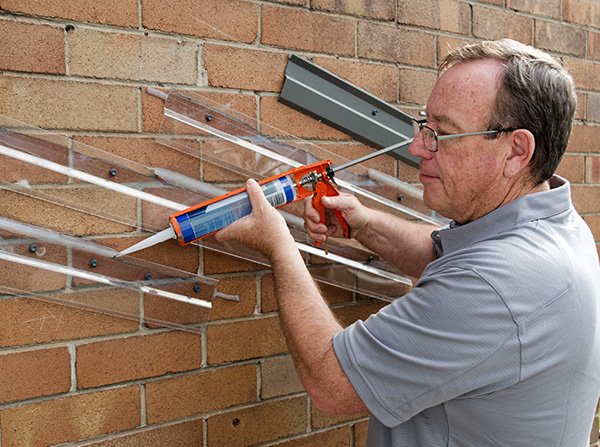
The new ASI Pressure Flashing Installation Guidance introduces an alternative approach that:
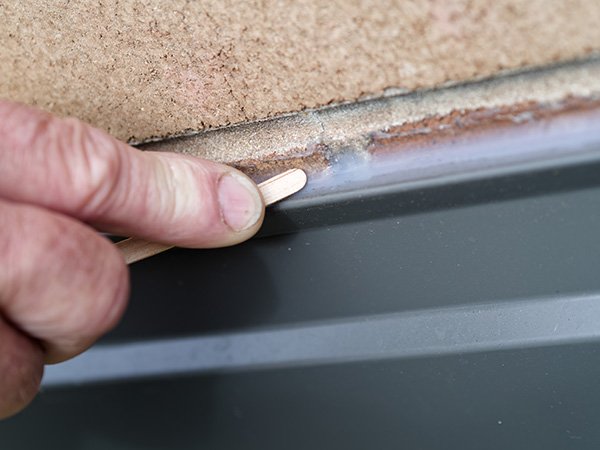
- Uses continuous beads of high‑performance, non‑extended neutral cure silicone sealant
- Eliminates the need to chase masonry altogether
- Allows wider fixing centres, reducing drilling requirements
- Accommodates both smooth and rough masonry surfaces
Rather than relying on cutting into blockwork, pressure flashings are sealed and restrained using silicone in combination with mechanical fixing where required, delivering effective sealing while significantly reducing exposure to silica dust.
Note that this alternative approach should be assessed against local plumbing and building authority requirements.
Supported by BlueScope testing and industry collaboration
Over a six‑month period, BlueScope’s technical team worked alongside industry partners to test and validate the approach, including:
- Water spray testing to verify resistance to water ingress
- Testing on real masonry walls (smooth and rough)
- Structural modelling under wind load conditions
This work helped inform the final guidance published by ASI, ensuring it reflects real‑world conditions and helps to deliver practical, compliant outcomes for steel roofing and walling applications.
While published independently by ASI, the documents reflect broad industry input, reinforcing a shared commitment to safer, higher‑performing construction practices.
Updated guidance on sealant selection for steel applications
Alongside pressure flashing installation, ASI has also released updated guidance on silicone sealant selection for use with exterior coated steel products, including:
- Roofing
- Flashings
- Rainwater goods
- Wall cladding
The guidance highlights the importance of specifying:
- Neutral cure silicone sealants
- With a minimum 90% silicone content
- Compliant with ASI Technical Specification TS‑001
Correct sealant selection and application are critical to supporting long‑term durability and weather performance of steel applications (including COLORBOND® steel and ZINCALUME® steel).
BlueScope has updated Technical Bulletin TB-9 Sealants for exterior BlueScope coated steel products to reflect this guidance.
What the guidance means for the industry
For builders, rollformers, and industry partners, the new guidance provides:
- Clear alternative to traditional flashing installation
- Practical ways to help reduce silica dust risk on site
- Confidence that performance, durability and compliance are maintained
- Alignment with evolving health, safety and regulatory expectations
Together, the two ASI documents offer a clearer, more consistent reference point for the design and installation of steel cladding systems.

Further information
- Download: ASI Pressure Flashing Installation Guidance (ASI TS‑002)
- Download: ASI Silicone Specification for Exterior Coated Steel Products (ASI TS‑001)
- Download: BlueScope Technical Bulletin TB-9 Sealants for Exterior BlueScope Coated Steel Products
- Explore more: ASI guidance series - Designing to NCC Using Steel